MD · FAANS · FACS · FCNS
Training, technology, and a decision you can understand.
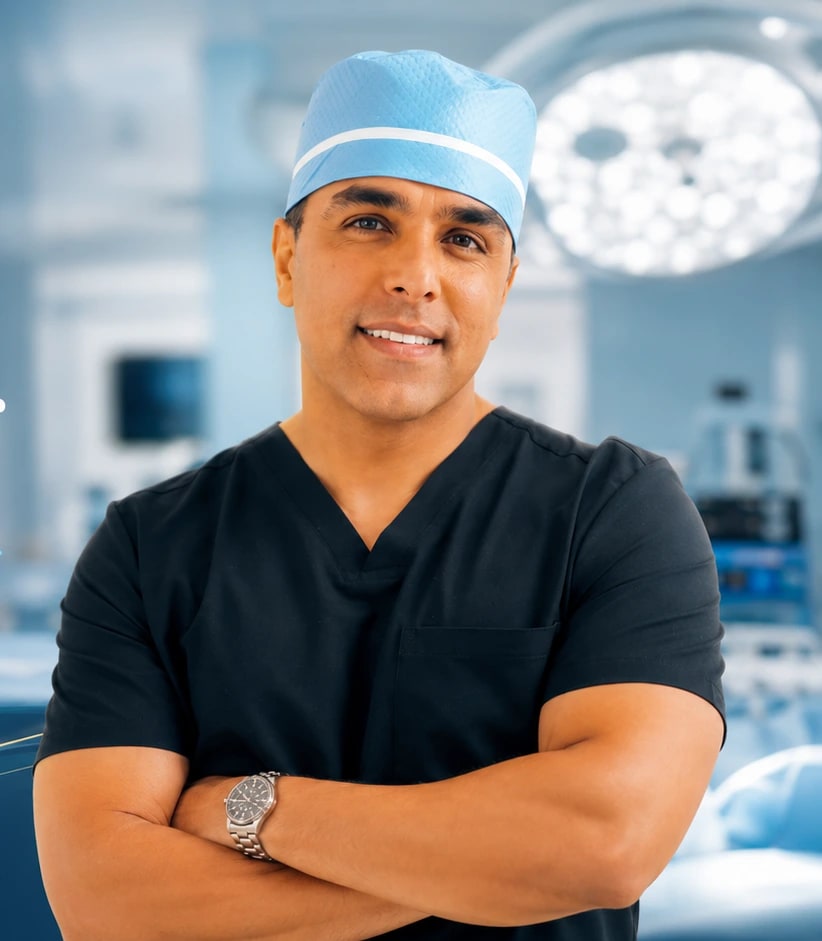
Dr. Abdul Baker, MD, FAANS, FACS, FCNS is a board-certified neurosurgeon with fellowship training in spine and peripheral nerve surgery. His clinical work includes disorders of the brain, spine, and peripheral nerves.
Board Certification
Certified by the American Board of Neurological Surgery.
Two Fellowships
Post-residency fellowship training in complex spine at Louisville, and in spine and peripheral nerve surgery at Johns Hopkins.
Academic Honors
Graduated with honors and inducted into the Alpha Omega Alpha National Medical Honor Society.
Clinical Focus
Brain and spinal tumors, spine surgery, neurotrauma, and peripheral nerve disorders.
Robotic Experience
Performed the first robotic-assisted spine procedures in North Dakota and in the Middle East.
Published Work
Contributed to peer-reviewed and professional research on spine surgery outcomes.
Procedural Firsts
Where the technique arrived first.
Dated milestones in the adoption of neuromodulation and robotic spine surgery. Each describes a procedure performed, not a result promised.
- 2011
Spinal cord stimulator for paraplegia
Among the first surgeons to place a spinal cord stimulator as a treatment for paraplegia. Results in any individual case depend on the injury, the anatomy, and the clinical circumstances.
- 2019
First robotic spine surgery in North Dakota
Performed the first robotic-assisted spine procedure in the state.
- 2022
First robotic spine surgery in the Middle East
Performed the first robotic-assisted spine procedure in the region.
Individual results vary. A procedure being appropriate for one patient does not make it appropriate for another.
Training
Education & professional path.
Undergraduate
Murray State University, Kentucky — Magna Cum Laude
Medical School
Wright State University Boonshoft School of Medicine
Internship
Cleveland Clinic / Fairview Hospital
Neurosurgery Residency
University of Louisville School of Medicine
Complex Spine Fellowship
University of Louisville School of Medicine
Spine & Peripheral Nerve Fellowship
Johns Hopkins University
Practice
Minimally Invasive Neurosurgery PLLC
Care Philosophy
The recommendation comes before the procedure.
A consultation begins by deciding whether the imaging, symptoms, and examination point to the same diagnosis. Treatment options can then be compared on their expected benefits, limitations, and recovery demands.
Non-surgical care may be appropriate for many conditions. When an operation is considered, the goal is to select an approach that addresses the diagnosed problem while preserving healthy anatomy where possible.
Technology — including navigation, robotics, and minimally invasive instruments — supports a surgeon's judgment. It does not replace individualized evaluation or informed consent.
Also serves as
Chief Medical & Strategy Officer, TriCelX
A regenerative medicine company developing cell-based therapies under FDA oversight. The role informs how regenerative options are discussed here — including when the evidence does not yet support them.
Check the credentials yourself
- American Board of Neurological Surgery (opens in a new tab)
Verify board certification
- Texas Medical Board (opens in a new tab)
Verify Texas medical licence
- NPI Registry (opens in a new tab)
Verify national provider identifier